China Top 10 AC Chargers How Do They Affect EV Battery Life?

Time:2026-09-25 Author:Mason
0%

Choosing an AC charger is not only about charging speed. For EV owners, the charger on a garage wall can shape daily charging habits, energy use, and convenience. But does it directly determine how long a battery lasts? Usually, not by itself. An AC charger supplies power to the vehicle’s onboard charger, which manages the flow into the battery. Battery temperature, charging settings, vehicle design, and regular use also matter.

This guide explores China’s top 10 AC chargers and asks: How AC chargers impact EV battery life. It looks at practical features such as adjustable current, charging schedules, temperature protection, and clear status displays. These details can help owners avoid charging at unnecessarily high power or leaving a car plugged in without a plan. Small choices matter. A scheduled overnight charge, for example, may suit a commuter better than repeated urgent charging after short trips.

A product ranking cannot tell the whole story. Installation quality and compatibility with the vehicle are just as important, and specifications alone do not prove long-term battery benefits. This is easy to overlook. The comparisons ahead focus on what chargers can realistically control—and what remains dependent on the car and its operating conditions. Some differences may seem less dramatic than expected. That is worth keeping in mind when choosing a charger for years of everyday use.
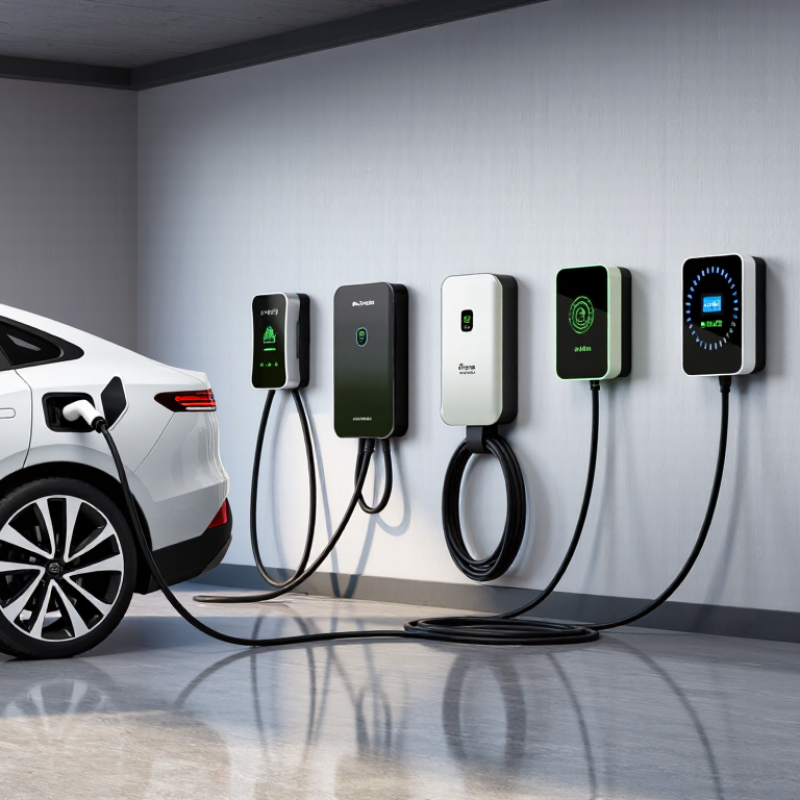
China Top 10 AC Chargers How Do They Affect EV Battery Life?

Define China’s AC Charger Market: GB/T 18487.1 and 7–22 kW Classes

China’s AC charger market is shaped by GB/T 18487.1, the national standard for conductive charging systems. It sets a technical framework for charging operation and safety. That common framework helps vehicles and charging equipment work together, but it does not make every installation identical.

The 7–22 kW range describes AC charger power classes, not a guaranteed charging speed for every car. A vehicle’s onboard charger sets its own maximum AC input. If a 22 kW unit serves a car limited to 7 kW AC, the car will not suddenly charge faster. The site’s electrical capacity, cable condition, and other active loads also matter. Check the vehicle specifications.

For battery life, moderate AC charging often produces less heat than high-power DC charging, but power alone cannot predict long-term battery health. Battery temperature, charging habits, and the vehicle’s thermal controls all play a part. I would not treat a charger’s kW label as a battery-life promise. It is a useful starting point, not the whole picture. Real-world charging can be less tidy than a specification sheet suggests.

Compare the Top 10 by Rated Power, Connector, Protection, and Smart Controls

Comparing China’s ten leading AC chargers means looking beyond headline power. Common ratings include 7, 11, and 22 kW, but a car may accept less than the charger supplies. Check the GB/T AC connector, then confirm the vehicle’s onboard charging limit. A faster rating does not automatically mean faster charging. Small details matter.

Protection deserves equal weight. Look for residual-current, overcurrent, overtemperature, and surge protection, plus a clearly stated enclosure rating. These features help address faults, moisture, and dusty parking spaces. The IEA’s Global EV Outlook 2024 reports that public charging points worldwide exceeded four million in 2023. That growth makes installation quality and dependable daily operation increasingly relevant. Still, a charger’s specification sheet cannot prove how well it performs in a specific garage.

Smart controls can schedule charging during cheaper hours, monitor consumption, and balance loads across several vehicles. These functions may improve convenience, but complicated apps can frustrate users. Battery life depends on more than charger choice: vehicle temperature management, charging habits, and climate matter too. Geotab’s 2024 EV Battery Health Report analyzed about 10,000 vehicles and found average annual battery degradation of 1.8%. Its findings associate frequent high-power DC charging with greater degradation; that is not direct evidence that ordinary AC charging prevents it. A fair comparison should therefore value safe protection and reliable controls, not promise longer battery life.

Convert Charger Output to Battery C-Rate: 7 kW on 60 kWh ≈ 0.12C

A 7 kW AC charger supplying a 60 kWh battery gives a simple estimate: 7 ÷ 60 = 0.117C, or about 0.12C. In ideal conditions, that is a gentle charging rate. Think of it as adding energy gradually, rather than pushing a large current into the pack. A driver charging overnight in a cool garage may see less battery heating than during repeated high-power fast charging. Small detail, real difference.

The estimate is not the whole story. AC power passes through the vehicle’s onboard charger, and conversion losses mean the battery may receive less than 7 kW. The car can also reduce charging power as the battery fills, or when temperatures are very hot or cold. Battery capacity may refer to usable or total capacity, so the calculated C-rate is only approximate. That part is easy to overlook. In practice, battery chemistry, thermal management, state of charge, and charging habits also shape long-term wear. A 0.12C figure suggests modest charging stress; it does not guarantee a particular battery lifespan. Check the vehicle’s charging display and manual, because real-world power can differ from the charger’s rating.

AC Charging Power vs. Theoretical Battery C-Rate

Illustrative comparison for a 60 kWh EV battery pack. C-rate is estimated as charging power (kW) divided by battery capacity (kWh).

For a 60 kWh pack, 7 kW is approximately 0.12C. These are theoretical estimates: actual battery charging power can be lower because of onboard-charger limits, conversion losses, temperature, and charging controls. C-rate alone does not determine battery life.

Assess Degradation Against Geotab’s 2024 Finding: 1.8% Average Annual Battery Loss

Geotab’s 2024 analysis of more than 10,000 electric vehicles found average battery capacity loss of 1.8% per year. That figure is a fleet-level benchmark, not a promise for every car. For drivers comparing AC chargers, the key detail is how charging habits shape heat and charging speed. An AC wall unit supplies power to the vehicle; the vehicle’s onboard charger manages conversion and charging. So a charger’s ranking alone cannot predict battery life.

Geotab reported average degradation of about 1.5% annually for vehicles mostly using AC or lower-power charging, compared with roughly 3% for frequent charging above 100 kW. These figures show an association, not proof that charging speed alone caused the difference. Climate, mileage, charging frequency, and vehicle design also matter. A car parked in summer sun may face more battery stress than one charged overnight in a cool garage. Small details count.

For a fair comparison, check whether an AC charger supports adjustable current and scheduled charging, then use settings suited to the vehicle and household wiring. The U.S. Department of Energy’s Alternative Fuels Data Center explains that charging equipment and vehicle limits both affect charging power. Still, slower charging is not a magic shield. Geotab’s 1.8% average is useful context, but real-world results vary—and the available data cannot make every charger-to-battery comparison definitive.

Rank Battery-Life Effects by Charging Rate, Temperature, Usage, and Vehicle Controls

Battery-life effects are best ranked by temperature, time spent near full charge, charging rate, and daily usage. Heat usually deserves the most attention. A car parked in summer sun while charging may stay warm long after the cable is unplugged. Cold weather can also limit charging until the battery warms. That matters.

AC charging is generally gentler than frequent high-power fast charging, but the charger’s listed output is not the whole story. The vehicle’s onboard charger sets the actual rate. A modest overnight charge is often practical; repeatedly charging at the fastest available AC rate may add heat, especially in a warm garage. Still, I would not treat this ranking as universal. Battery chemistry and thermal design vary.

Vehicle controls can reduce avoidable stress. Scheduled charging can finish near departure, rather than leaving the battery full for hours. A lower daily charge limit may help when the car does not need its full range, while occasional full charges may be appropriate when the vehicle requires them for calibration. Check the owner’s guidance. Driving patterns matter, too: frequent short trips and long periods parked at a high state of charge create different conditions. Charger choice matters, but temperature, timing, and vehicle settings often matter more.

FAQS

What does GB/T 18487.1 cover?

It provides a technical framework for conductive charging operation and safety. Individual installations can still differ.

Will a 22 kW charger charge every car faster than a 7 kW charger?

No. The vehicle’s onboard charger limits its AC input. A car capped at 7 kW will not use the full 22 kW. Site capacity and cable condition matter too.

How can I estimate the charging C-rate?

Divide charger power by battery capacity. For 7 kW and 60 kWh, the estimate is about 0.12C. It is approximate.

Does a 0.12C rate guarantee longer battery life?

No. It suggests modest charging stress, not a specific lifespan. Temperature, battery chemistry, and vehicle controls also affect wear.

Which conditions can affect battery life?

Heat, time spent near full charge, charging rate, and daily usage all matter. A car charging in a hot garage may stay warm after unplugging. That matters.

Is AC charging always gentler than DC charging?

Moderate AC charging often produces less heat than high-power DC charging. But the charger’s power rating alone cannot predict battery health. Not a promise.

Can scheduled charging help reduce battery stress?

It can finish charging closer to departure, instead of leaving the battery full for hours. A lower daily charge limit may suit drivers who need less range.

Does cold weather change AC charging?

Yes. Very cold temperatures can lead the vehicle to reduce charging power until the battery warms. Check the car’s display and manual; estimates can be imperfect.

Conclusion

China’s AC charging market is shaped by the GB/T 18487.1 standard and commonly covers chargers rated from 7 to 22 kW. Comparing options across this range means looking beyond rated power to connector compatibility, electrical protections, and smart controls such as scheduled charging and current adjustment. Charger output also needs to be considered in relation to battery capacity: a 7 kW charger supplying a 60 kWh battery corresponds to roughly 0.12C, a moderate charging rate for everyday use.

How AC chargers impact EV battery life depends not only on charging rate but also on temperature, charging habits, and the vehicle’s battery-management controls. A 2024 fleet analysis reported average battery capacity loss of 1.8% per year, but individual results vary with operating conditions. In general, moderate AC charging, avoiding prolonged exposure to extreme temperatures, and following the vehicle’s recommended charging settings can help limit unnecessary battery stress.

Mason

Mason

Mason is a seasoned marketing professional with a deep expertise in the company's offerings and a passion for driving brand awareness. With a strong background in digital marketing strategies, he has an innate ability to connect with diverse audiences and effectively communicate product benefits.......