As electric vehicles enter more homes, solar power can make charging cleaner, cheaper, and more independent. Yet the connection is not simply a cable between rooftop panels and an AC charger. It requires careful planning.
This guide explores How to integrate AC chargers with solar panels, from household load checks to energy management. A typical system includes solar modules, an inverter, a smart meter, and a compatible AC wallbox. Each component must communicate correctly. Otherwise, the charger may draw electricity from the grid while the roof is producing power.
Small details matter. Cable size matters. So does phase balancing. A 7.4-kilowatt charger can quickly exceed a home’s available capacity. During cloud cover, charging may also become unstable without grid support or battery storage.
According to solar and energy-storage consultant Chris Rudge, “Good system design begins with understanding how energy moves through the property.” That practical principle remains important. Solar output changes every few minutes. Vehicle charging demand changes even faster.
The best installation therefore uses dynamic load management. It can reduce charging power when household appliances start. It can increase charging when solar production rises. A dashboard should show these decisions clearly, not hide them behind confusing settings.
There is no perfect setup. Roof orientation, seasonal sunlight, tariffs, and driving habits all affect results. A system designed only for sunny afternoons may disappoint during winter evenings.
This article compares leading AC chargers and explains how they work with solar generation. It also examines installation limits, monitoring tools, and common design mistakes. Good results depend on honest measurements, qualified installers, and realistic expectations.
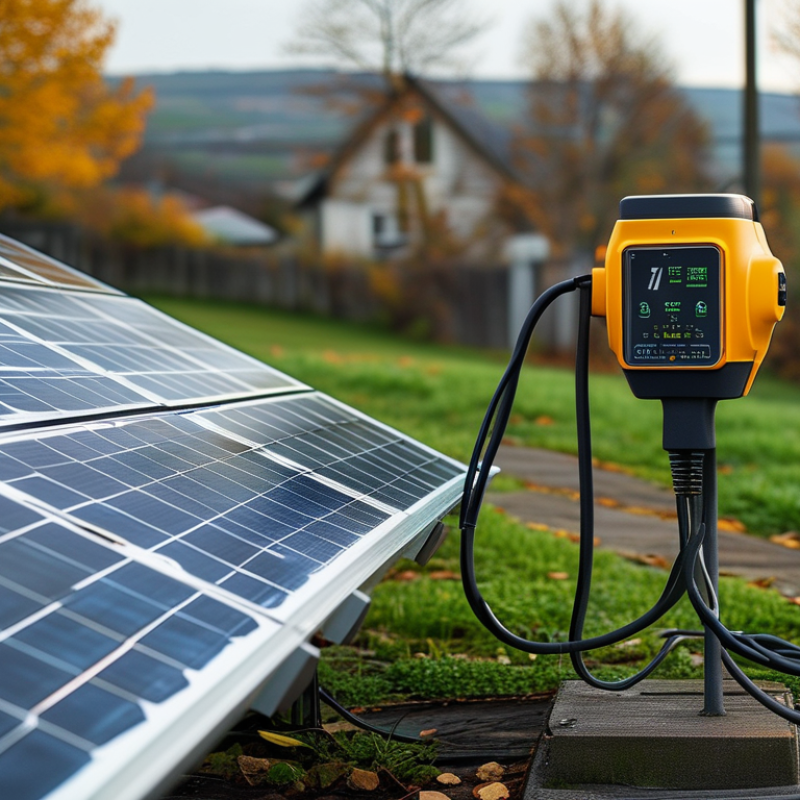
AC chargers can work smoothly with solar panels when the energy flow is managed correctly. Solar panels produce direct current, while most home AC chargers receive alternating current. A solar inverter converts solar energy into usable AC power for the charger and household appliances. The vehicle’s onboard charger then converts AC back into DC for the battery.
In practical installations, a smart energy meter measures solar production and household demand. The charger can use surplus power instead of drawing heavily from the grid. For example, if the panels produce 5 kW and the home uses 2 kW, the charger may receive the remaining 3 kW. Cloud cover changes this balance quickly. A dynamic charger should reduce its output, rather than interrupting charging repeatedly. An electrician should also check cable size, grounding, phase balance, and protection devices. These details are easy to underestimate.
Tips: Set a minimum charging current before using solar-only mode. Keep a small grid allowance during unstable weather. Check whether your inverter supports export control. Review the charger’s data after installation, not just its advertised features. A system may appear efficient but still waste energy if settings are poorly matched. That needs honest testing.
Top AC Chargers: How to Integrate with Solar Panels?
Assessing Solar Capacity, Charger Ratings, and Energy Requirements
Solar integration starts with measured capacity, not the charger label. The International Renewable Energy Agency reported 1,419 GW of global solar capacity by the end of 2023. Yet household output changes hourly. A 6 kW solar array may produce about 24 kWh on a four-hour sunny day, before temperature, inverter, and wiring losses.
A 7.4 kW AC charger can deliver 29.6 kWh in four hours. That exceeds the daily output of many smaller residential systems. The U.S. Department of Energy identifies Level 2 charging as commonly operating around 3.3 to 19.2 kW, depending on equipment and circuit design. Therefore, charger selection should follow usable solar production, not peak panel capacity. A 3.6 kW charger may align better with a modest array. It can also reduce grid imports during midday.
Energy needs must include charging losses and driving distance. A vehicle using 18 kWh per 100 kilometers needs roughly 27 kWh for 150 kilometers, assuming charging losses near 10 percent. Real homes are messier. My first estimate was too optimistic. Winter shade, a dirty panel, or evening charging can change the result. The IEA’s Global EV Outlook 2024 also notes that charging demand will rise sharply as electric vehicle adoption expands. Smart charging, a compatible inverter, and load monitoring can shift charging toward solar hours. A qualified installer should verify continuous current, protection devices, and local electrical requirements before installation.
Generic planning comparison for integrating AC electric vehicle chargers with photovoltaic solar systems
| AC Charger Class | Typical Electrical Supply | Rated Charging Power | Approximate Energy Added in 1 Hour | Recommended PV Capacity for Strong Solar Matching* | Approximate PV Output per Day** | Best-Fit Solar Application | Important Integration Requirement |
|---|---|---|---|---|---|---|---|
| Entry-Level AC | 230 V single-phase, up to 16 A | 3.7 kW | About 3.3 kWh delivered to the vehicle after charging losses | About 4.6 kWp | Approximately 16 kWh on a 3.5 peak-sun-hour day | Small residential solar systems, overnight charging, and low daily mileage | Use a solar-aware charger or energy management system to reduce grid imports when PV output changes |
| Standard Single-Phase AC | 230 V single-phase, up to 32 A | 7.4 kW | About 6.7 kWh delivered to the vehicle after charging losses | About 9.3 kWp | Approximately 33 kWh on a 3.5 peak-sun-hour day | Typical homes with medium-sized rooftop PV systems and daytime charging | Confirm that the main service, inverter, and protective devices can support the additional continuous load |
| Three-Phase AC | 400 V three-phase, up to 16 A per phase | 11 kW | About 9.9 kWh delivered to the vehicle after charging losses | About 13.8 kWp | Approximately 48 kWh on a 3.5 peak-sun-hour day | Larger homes, workplaces, and sites with three-phase electrical service | Three-phase compatibility and phase-balanced load management are required; local electrical rules must be followed |
| High-Power AC | 400 V three-phase, up to 32 A per phase | 22 kW | About 19.8 kWh delivered to the vehicle after charging losses | About 27.5 kWp | Approximately 96 kWh on a 3.5 peak-sun-hour day | Commercial sites, fleet depots, and properties with substantial three-phase capacity | Requires a compatible vehicle, high-capacity electrical connection, dynamic load control, and adequate inverter capacity |
| Solar-Optimized Charging Mode | Single-phase or three-phase, depending on the charger | Variable output, commonly from approximately 1.4 kW upward | Varies with available solar power and vehicle charging limits | Based on daily energy demand rather than only charger rating | Depends on installed PV size, weather, shading, and system orientation | Sites aiming to maximize self-consumption and minimize grid electricity use | Requires a current sensor or smart meter, export monitoring, controllable charging, and suitable minimum-current settings |
Connecting the AC Charger to the Solar Energy Infrastructure
An AC charger usually connects to the building’s distribution board, not directly to the solar panels. Solar modules send DC electricity to an inverter, which supplies AC power through the property’s electrical system. A qualified electrician should check the panel capacity, cable size, grounding, and protective devices before installation.
The charger can use a smart energy meter to monitor solar production, household demand, and grid imports. When excess solar power appears, the control system can reduce or increase charging current automatically. This works best with adjustable charging limits and reliable communication between the inverter, meter, and charger. Three-phase properties may need phase balancing to prevent uneven loads.
Clouds change everything.
A clear afternoon may provide surplus energy, while a passing shadow can force grid support within seconds. Battery storage can soften these fluctuations, but it also adds cost, maintenance, and conversion losses. In practice, solar-only charging may pause more often than expected. Users should review export limits, time-of-use tariffs, and local electrical rules before choosing a control strategy. A licensed installer can test isolation, residual-current protection, and load management under real operating conditions. That final test matters, because a neat installation is not always a stable one.
Smart charging can turn a rooftop solar system into a practical energy source for electric vehicle charging. The key is measuring household demand before sending power to the vehicle. A compatible energy meter tracks solar generation, grid import, and appliance loads in real time. The charger then adjusts its current automatically.
Use surplus solar mode when sunlight is strong. For example, a midday system may send 4.2 kilowatts to the car after the home consumes its share. When clouds pass, charging can slow down or pause. This prevents unnecessary grid consumption. A minimum charging current should be configured according to the vehicle and charger specifications. Professional installation also requires correct grounding, circuit protection, and compliance with local electrical standards.
Scheduling adds another layer of control. Set charging windows around the strongest solar hours, but allow an emergency override when the battery needs power overnight. A home battery can complicate the decision. Some systems should preserve battery energy instead of exporting it to the vehicle. No forecast is perfect. Sudden shade, changing household loads, and inaccurate meters can reduce solar usage. Testing the system across several sunny and cloudy days reveals these weaknesses. Review the data weekly, then adjust charging thresholds, export limits, and priority settings. Small changes often improve real-world performance.
A reliable AC charger starts with measurement, not assumptions. The IEA’s Global EV Outlook 2024 reports that electric car sales exceeded 14 million in 2023, making home charging a major energy-management issue. An integrated solar system should record solar production, household demand, grid imports, and charging energy separately. Use a certified energy meter near the charger and compare its readings with the inverter portal each week. A dashboard can still lie.
Set alerts for unusual patterns. A sudden drop in solar charging may indicate shading, inverter clipping, a loose connection, or incorrect load-balancing settings. Record charging power, session duration, cable temperature, and residual-current protection events. IEC 61851 guidance supports controlled communication and safety functions between electric vehicles and charging equipment, but field inspection remains necessary. Software cannot detect every warm terminal.
Maintenance should follow the site, not only the calendar. Clean the charger enclosure, inspect connectors for discoloration, and check cable strain relief every few months. NREL research has reported a typical photovoltaic module degradation rate near 0.5% annually, so gradual output loss should not immediately be blamed on the charger. Compare seasonal data against weather and occupancy records. My practical concern is overconfidence in automation: a system may continue operating while efficiency quietly declines. Keep firmware records, test protective devices through qualified personnel, and review performance after storms or electrical work.
C charger connect to a solar energy system?
A qualified electrician should inspect panel capacity, cable size, grounding, and protective devices. They should also test isolation and residual-current protection. Local electrical requirements must be followed. A neat installation is not always stable.
A smart meter measures solar generation, household demand, and grid imports. The charger increases current when surplus energy appears. It reduces current when household demand rises. It may pause during heavy cloud cover.
A clear afternoon may provide several kilowatts of surplus power. A passing shadow can reduce output within seconds. The charger may then use grid electricity, slow down, or stop. Clouds change everything.
Yes, if the system supports solar-only charging. However, charging may pause more often than expected. A midday system might send 4.2 kilowatts to the vehicle. That depends on household usage and sunlight.
Phase balancing helps prevent uneven electrical loads. This matters when household appliances and the charger operate together. Poor balancing may cause unwanted limits or interruptions. The actual need depends on the property’s wiring.
Not always. Some systems should preserve battery energy for evening household use. Sending stored energy to the vehicle can add conversion losses. It may also increase battery cycling and operating costs.
Set charging windows during the strongest expected sunlight. Allow an emergency override when the vehicle needs power overnight. Review energy data across sunny and cloudy days. Forecasts are useful, but imperfect.
Review charging data weekly. Adjust minimum current, charging thresholds, export limits, and priority settings. Check whether the vehicle receives solar power or grid support. Small changes often improve real-world performance. Our assumptions can be wrong.
Integrating an AC charger with a solar power system can create a more efficient and sustainable way to supply electricity for electric vehicles and other equipment. To understand How to integrate AC chargers with solar panels, first evaluate the solar array’s capacity, daily energy production, inverter output, and the charger’s power rating. These factors help determine whether the system can meet charging needs without overloading the electrical infrastructure or relying excessively on grid electricity.
The charger should be connected through suitable protection devices and a properly configured inverter or energy management system. Smart charging settings can prioritize solar-generated power, adjust charging speed according to available energy, and schedule charging during periods of strong sunlight. Ongoing monitoring of solar production, energy consumption, charging performance, and system temperature helps identify inefficiencies early. Regular inspections, software updates, and professional electrical maintenance can keep the integrated system safe, reliable, and effective over time.
Walnut Charger