The Dakar Peninsula is currently experiencing an unprecedented transformation in its commercial transport and urban mobility landscape. Driven by Senegal's national strategic agenda under the Plan Sénégal Émergent (PSE), the metropolitan region of Greater Dakar—encompassing key economic sectors from Plateau, Almadies, and Ngor to the new administrative node of Diamniadio—is actively executing decarbonization initiatives. Central to this transition is the rapid adoption of electric two-wheelers, commercial electric fleets, public transit feeders, and private electric passenger vehicles. However, the sustainable scalability of this e-mobility expansion relies entirely on the deployment of robust, grid-compliant AC charging stations equipped with advanced, automated billing systems.
Commercial Value Driver: Operating an EV charging station network in Dakar demands more than basic energy delivery. Charge Point Operators (CPOs), commercial real estate developers, and municipal transit partners require resilient hardware capable of handling high ambient temperatures and marine salt-spray corrosion, paired with multi-channel payment ecosystems integrated directly with local financial pipelines like Wave, Orange Money, and standard EMV credit card clearing frameworks.
Establishing commercial charging assets within Greater Dakar presents a unique combination of opportunities and technical constraints. Understanding these parameters is essential for engineering charging hardware that delivers long-term ROI without suffering prematurely from environmental or electrical degradation.
The local distribution network operated by Senelec (Société Nationale d'Électricité du Sénégal) delivers standard low-voltage nominal utility supplies of 230V single-phase and 400V three-phase at 50Hz. However, grid fluctuations, transient voltage spikes, and localized voltage drops are common technical challenges across industrial zones such as Pikine, Hann Bel-Air, and Rufisque. AC Charging Stations deployed in these zones must feature integrated broad-range Voltage Protection Modules (under-voltage/over-voltage cutoffs from 170V to 275V AC), dynamic ground-fault monitoring (6mA DC leakage detection per IEC 62955), and integrated surge protective devices (SPD Type II) to prevent costly control board failures.
Dakar's geography exposes outdoor electronic hardware to harsh environment conditions, including intense UV radiation, high relative humidity (exceeding 85%), ambient working temperatures frequently exceeding 40°C, and heavy atmospheric salt mist blowing off the Atlantic Coast. Standard commercial enclosures deteriorate rapidly under these stress factors. Our specialized AC charging station series incorporates galvanized steel with anti-corrosive powder coatings or heavy-duty polycarbonate enclosure design (IP65 ingress rating and IK10 impact protection rating), alongside conformal-coated internal printed circuit boards (PCBs) to guarantee a 10-year design life in coastal West African environments.
MID-certified digital power meters built directly into each charging circuit guarantee precise, tamper-proof kWh energy accounting for accurate billing.
TLS 1.3 encrypted communications between charger endpoints and backend cloud management system protects revenue transactions from cyber tampering.
Real-time power allocation prevents grid overload across commercial facilities, maximizing available capacity without requiring expensive grid transformer upgrades.
A charging station is only as viable as its monetization system. In Dakar, where cash-to-digital payment conversion is rapidly shifting towards mobile financial tools, a rigid billing architecture creates immediate friction for end users and revenue loss for CPOs.
While European and North American EV ecosystems rely almost exclusively on contactless credit cards or localized RFID fobs, the West African market demands direct API interoperability with regional Mobile Money operators. Our smart AC chargers feature cloud middleware supporting dynamic QR code rendering on high-brightness 7-inch LCD displays. Users simply scan the QR code using smartphones to trigger instant payment authentication via:
To eliminate vendor lock-in, all Foshan Walnut Charger commercial AC units natively support Open Charge Point Protocol (OCPP 1.6-JSON and OCPP 2.0.1). This open architecture empowers site hosts in Dakar to link hardware with any global or localized Charge Point Management System (CPMS). CPOs can configure real-time tariffs, implement peak and off-peak pricing structures, execute remote diagnostic resets, and generate detailed automated revenue reports.
| Specification Category | Commercial Level 2 AC Charger (7kW - 22kW) | Industrial Dual-Gun AC Station (40kW) |
|---|---|---|
| Target Application | Workplaces, Retail Malls, Hospitality (Almadies/Plateau) | Commercial Bus Depots, Delivery Fleets, Public Hubs |
| Input Voltage / Phase | 230V Single-Phase / 400V Three-Phase ±15% | 400V Three-Phase ±15%, 50Hz Senelec Standard |
| Metering Accuracy | MID Certified Class 1.0 Active Energy Meter | MID Certified Class 0.5 High-Precision Meter |
| User Authorization | RFID (ISO 14443A), Mobile App, Dynamic QR Code | RFID, Dynamic QR Code, Plug & Charge (ISO 15118) |
| Network Interface | 4G LTE Cat-1 / Wi-Fi / Ethernet RJ45 | Dual-SIM 4G LTE with Fallback 2G / Industrial Ethernet |
| Billing Protocol | OCPP 1.6-J / OCPP 2.0.1 Compliance | OCPP 1.6-J / OCPP 2.0.1 with Local Offline Storage |
| Operating Temp Range | -30°C to +55°C (Derating above 50°C) | -35°C to +60°C (Active forced air cooling) |
Deploying EV charging equipment requires customized architectural design tailored to specific commercial use cases. Below are the primary deployment blueprints implemented across Senegal:
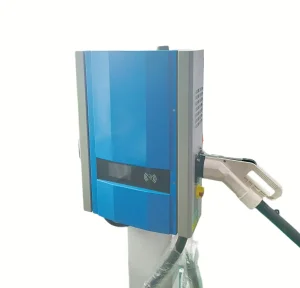
Hotels, business centers, and luxury residential complexes require sleek, aesthetic wall-mounted or pedestal AC chargers. Integrated RFID payment systems allow property owners to provide complimentary charging for VIP guests while automatically charging general public users via Mobile Money APIs. Dynamic Load Management (DLM) ensures that chargers scale down power output when the building's central HVAC loads peak, preventing expensive demand charges from Senelec.
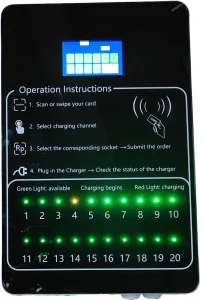
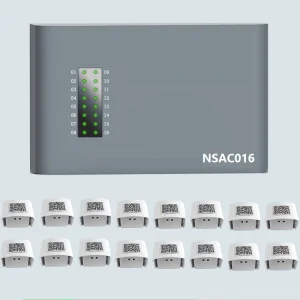
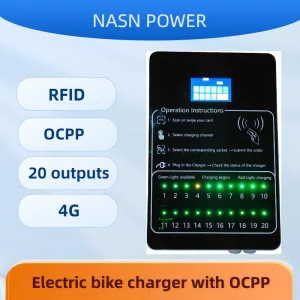
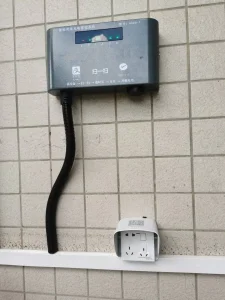
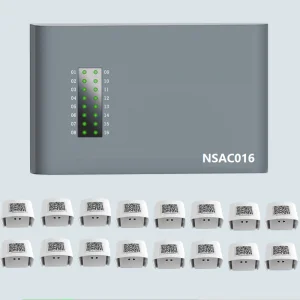
Last-mile logistics in Dakar rely heavily on two-wheelers and motorized tricycles. Dedicated multi-port AC charging stations with integrated RFID/4G authorization allow delivery companies to operate centralized power replenishment stations. Fleet drivers flash registered company RFID badges to initiate charging, with power consumption recorded automatically against corporate fleet operational accounts.
To reduce reliance on grid power and optimize operational expenses, corporate facilities are increasingly combining rooftop solar PV arrays with stationary battery energy storage systems (BESS) and AC EV chargers. Our OCPP chargers seamlessly interface with energy management software to prioritize charging during peak solar generation hours, storing excess power or channeling clean energy directly into fleet vehicles.
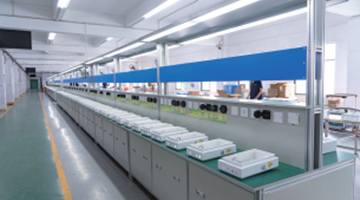
Foshan Walnut Charger Co., Ltd. is a premier high-tech enterprise specializing in the design, engineering, and mass production of advanced AC EV charging solutions for global commercial and residential applications. With a primary focus on smart wall-mounted charging stations, floor-standing commercial pedestals, and enterprise billing controllers, the company delivers reliable charging infrastructure engineered to withstand rigorous operational demands.
Our global product portfolio incorporates intelligent power distribution units, dual-connector load sharing, and real-time cloud management software. By maintaining strict compliance with international standards (CE, IEC 61851, ISO 9001), Foshan Walnut Charger provides turn-key hardware and software integration tailored specifically to emerging market dynamics in West Africa.
Partner With Us in Dakar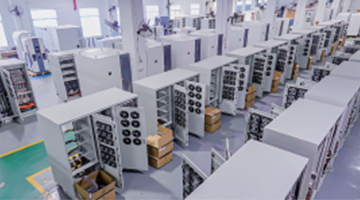
As EV adoption in West Africa accelerates, technological paradigms within the EV charging domain are continuously evolving. Manufacturers and infrastructure investors must select hardware platforms that offer forward compatibility with emerging software and hardware standards.
Eliminates the need for physical RFID cards or app interactions. The vehicle automatically authenticates its identity and settles payment transactions securely with the charger upon connection.
Enables EV batteries to act as distributed energy storage units. During peak demand or grid outages in Dakar, connected vehicles can feed energy back into commercial building circuits.
Machine-learning telemetry monitoring integrated within our cloud controllers analyzes electrical harmonics, temperature variations, and component stress to predict maintenance needs prior to equipment failure.
Compliance with local regulations and international safety directives is mandatory for grid connection approval in Senegal. Foshan Walnut Charger ensures full technical alignment with local standards:



Whether you are launching a public Charge Point Operator network, equipping a commercial real estate project in Almadies, or electrifying a corporate fleet, our engineering team provides tailored turn-key solutions.
Send Inquiry Now Walnut Charger